British Industrial Competitiveness Scheme (BICS) Application Support
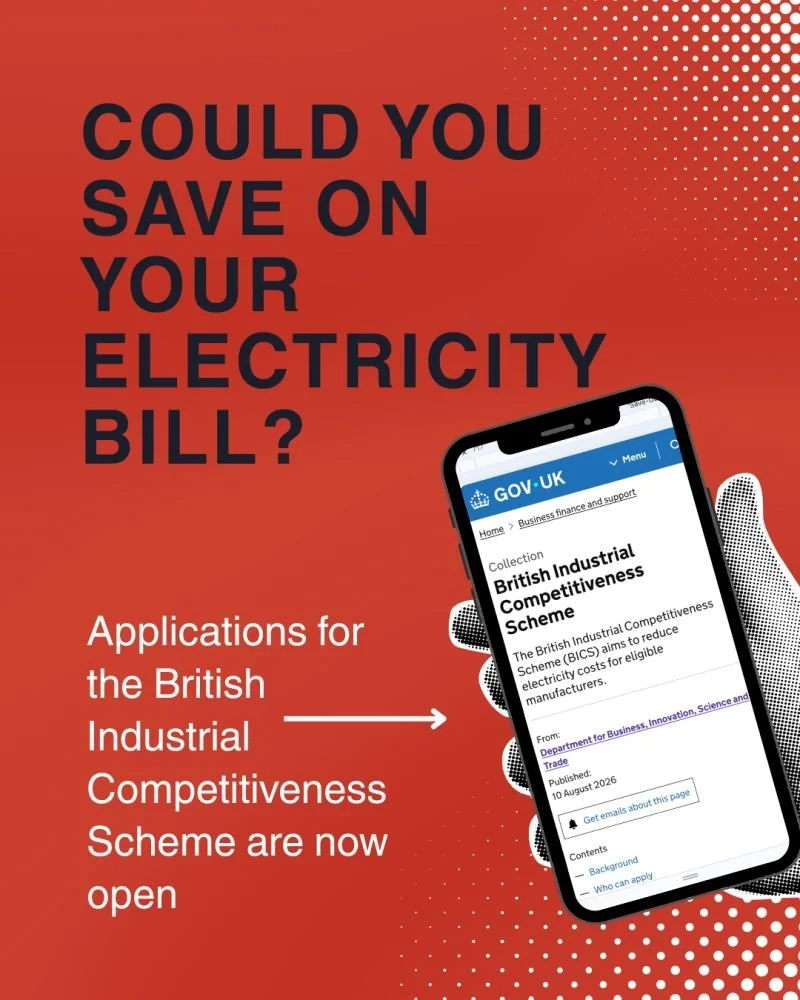
The British Industrial Competitiveness Scheme (BICS) offers eligible UK manufacturers significant savings on electricity costs by reducing certain energy policy charges.
HollenPlus provides specialist BICS application support and eligibility assessments, helping manufacturing businesses identify potential savings, assess qualifying electricity consumption and navigate the government application process. From initial eligibility checks and evidence preparation through to application submission and ongoing compliance, our experienced energy consultants provide a clear, cost-effective route to securing available electricity cost relief. With potential savings extending over five years, BICS presents a valuable opportunity for manufacturers to reduce operating costs, improve competitiveness and protect long-term profitability.

The British Industrial Competitiveness Scheme (BICS) offers eligible manufacturers across Great Britain the opportunity to reduce electricity costs by up to 25%, providing significant financial relief at a time of increasing pressure on industrial operating costs.
HollenPlus provides specialist BICS eligibility assessments, electricity consumption analysis and application support, helping manufacturing businesses identify potential savings and secure available government electricity cost exemptions.
We have recently identified forecast electricity cost savings of £240,000 over five years for a manufacturing occupier through the scheme. Our experienced energy consultants manage the process from initial eligibility checks and supporting evidence preparation through to application submission and ongoing compliance, ensuring businesses have a clear, efficient and cost-effective route to accessing the available relief.
The first BICS application window closes on 30 November 2026.
Contact HollenPlus to discuss your eligibility and potential electricity savings.
What Is the British Industrial Competitiveness Scheme (BICS)?
The British Industrial Competitiveness Scheme (BICS) is a UK Government initiative designed to reduce electricity costs for eligible manufacturing businesses across England, Scotland and Wales. Introduced as part of the Government's Industrial Strategy, the scheme aims to improve the competitiveness of British manufacturing by reducing the energy policy costs included in commercial electricity bills.
From April 2027, qualifying manufacturers will benefit from exemptions from certain electricity policy charges, with further relief introduced in October 2027. The Government estimates that the scheme could reduce electricity bills by up to 25%, equivalent to approximately £40 per MWh for eligible businesses.
The scheme provides exemptions from three electricity policy costs:
Renewables Obligation (RO): Charges associated with supporting renewable electricity generation.
Feed-in Tariffs (FiT): Costs associated with historic incentives for small-scale renewable electricity generation.
Capacity Market (CM): Charges supporting the availability of electricity generation capacity and security of supply.
Unlike traditional energy efficiency measures, BICS provides a financial benefit without requiring manufacturers to invest in new equipment, undertake building upgrades or change their electricity supplier.
Approved exemptions remain valid for five years, subject to ongoing eligibility and compliance requirements, creating an opportunity for substantial long-term operational savings.
HollenPlus helps manufacturing businesses understand the scheme, establish their eligibility and prepare the technical evidence required to support a successful application.
Who Is Eligible for BICS?
Eligibility for the British Industrial Competitiveness Scheme depends on the nature of a company's manufacturing activities, the products manufactured and the amount of electricity consumed at its premises.
To qualify, businesses must satisfy four principal eligibility criteria:
Companies House registration: The applicant must be registered with Companies House.
Eligible manufacturing sector: The business must operate within a qualifying manufacturing sector identified through its Standard Industrial Classification (SIC) code.
Eligible manufactured products: The manufacturing site must produce goods included within the Government's approved Harmonised System (HS) product codes.
Minimum electricity consumption: Each qualifying manufacturing site must consume at least 33 MWh of grid-supplied electricity annually, demonstrated through more than 16.5 MWh during the relevant six-month evidence period.
Eligible sectors include certain advanced manufacturing, engineering and foundational manufacturing industries that support the UK's strategic growth sectors.
Businesses operating multiple manufacturing facilities may also qualify, although eligibility and electricity consumption must be assessed at individual site level.
Does All Electricity Consumption Qualify?
Not necessarily. Where a manufacturing facility produces both eligible and ineligible products, the available exemption is determined by the proportion of grid electricity used for qualifying manufacturing activities.
Importantly, eligible electricity consumption may extend beyond production machinery to include supporting activities such as lighting, heating, ventilation, compressed air, process cooling, material handling and associated office functions, where these support eligible manufacturing.
Determining the correct exemption requires an understanding of manufacturing processes, electricity metering arrangements and how energy is consumed across the site.
HollenPlus undertakes BICS eligibility assessments and manufacturing electricity reviews, helping businesses establish whether their operations qualify and supporting the calculation of the appropriate exemption.
BICS Application Support and Consultancy
HollenPlus provides specialist British Industrial Competitiveness Scheme application support for manufacturing businesses, industrial occupiers, property owners and asset managers across Great Britain.
Our experienced energy consultants combine commercial property expertise with technical energy assessments to help clients navigate the eligibility requirements, establish qualifying electricity consumption and prepare the necessary application evidence.
Our BICS Consultancy Services
BICS Eligibility Assessment
We review the company's registered SIC codes, manufacturing activities, product classifications and electricity consumption to establish whether the business is likely to qualify for the scheme.
Electricity Consumption and Exemption Assessment
We analyse electricity invoices, Meter Point Administration Numbers (MPANs), manufacturing processes and relevant metering data to establish qualifying electricity consumption and determine the appropriate exemption tier.
Supporting Evidence and Documentation
We assist with compiling the required evidence, including electricity consumption records, production information, supporting activity calculations and explanatory statements.
BICS Application Preparation and Submission
We coordinate the application process, review supporting information for consistency, prepare the required submissions and assist with submission through the Government's application portal.
Ongoing Compliance and Eligibility Reviews
Following approval, we can assist with annual declarations, changes in manufacturing operations, electricity supply arrangements and the subsequent eligibility reassessment.
Our approach is designed to minimise the administrative burden on clients while providing clear, technically informed advice throughout the application process.

How Much Could Your Business Save Through BICS?
The British Industrial Competitiveness Scheme could generate substantial electricity cost savings for eligible manufacturers, particularly those operating energy-intensive production equipment, large manufacturing facilities or multiple sites.
The Government estimates that qualifying businesses could save up to approximately £40 per MWh of electricity consumption through the removal of specified energy policy costs.
The actual financial benefit will depend on electricity consumption, the applicable exemption tier, electricity supply arrangements and prevailing policy charges.
Illustrative Annual BICS Electricity Savings
| Annual Electricity Consumption | Potential Annual BICS Savings |
|---|---|
| 100 MWh | £3,500–£4,000 |
| 500 MWh | £17,500–£20,000 |
| 1,000 MWh | £35,000–£40,000 |
| 2,000 MWh | £70,000–£80,000 |
| 5,000 MWh | £175,000–£200,000 |
Illustrative savings assume a 100% exemption and annual relief of £35–£40/MWh at full implementation. Actual savings depend on eligibility, electricity consumption, applicable policy charges and the phased introduction of the scheme.
For manufacturers consuming significant volumes of electricity, the financial benefit could extend into hundreds of thousands of pounds over the five-year exemption period.
HollenPlus has recently identified forecast electricity cost savings of £240,000 over five years for a manufacturing occupier through the scheme.
Our BICS consultancy service helps businesses assess their potential savings using actual electricity consumption records, manufacturing activities and the applicable exemption criteria.
By establishing eligibility early and preparing a robust application, manufacturers can take practical steps towards reducing operating costs and improving long-term business competitiveness.
How to Apply for the British Industrial Competitiveness Scheme
Applying for BICS requires manufacturers to demonstrate that their business activities, electricity consumption and supporting documentation satisfy the Government's eligibility criteria.
HollenPlus provides a structured application service to help businesses complete the process efficiently.
Step 1: Initial BICS Eligibility Review
We undertake a preliminary assessment of your manufacturing activities, company registration, qualifying product codes and electricity consumption to establish whether the scheme is likely to be applicable.
Step 2: Electricity and Manufacturing Evidence Review
We request and review the relevant electricity invoices, MPAN details, manufacturing production records and supporting documentation.
Applications generally require evidence covering six consecutive months of electricity consumption and qualifying manufacturing activity.
Step 3: Qualifying Electricity Consumption Assessment
Where necessary, we assess electricity consumption associated with manufacturing processes and supporting building services to determine the proportion qualifying for relief.
This may include reviewing submetering information, equipment operating characteristics and manufacturing activity records.
Step 4: Application Preparation and Submission
We prepare the supporting technical information and application statements, coordinate client authorisation and assist with submission to the relevant Government department.
Step 5: Approval and Ongoing Support
Following a successful application, the approved exemption is communicated to the relevant electricity supplier and applied to qualifying electricity charges.
HollenPlus can provide further support with electricity bill verification, annual compliance declarations and subsequent eligibility reviews.
BICS Application Deadline
The first British Industrial Competitiveness Scheme application window closes at 11:59pm on 30 November 2026.
Successful first-year applicants are expected to receive Renewables Obligation and Feed-in Tariff exemptions from April 2027, followed by Capacity Market exemptions from October 2027.
Early preparation is particularly important where multiple electricity meters, mixed manufacturing activities or landlord electricity supply arrangements are involved.
Contact HollenPlus to discuss your BICS eligibility and the information required to prepare your application.
FAQs
-
The British Industrial Competitiveness Scheme (BICS) is a Government initiative that reduces certain electricity policy costs for eligible manufacturing businesses in Great Britain. The scheme is intended to improve industrial competitiveness by reducing operating expenditure on electricity.
-
The Government estimates that eligible manufacturers could reduce electricity bills by up to 25%, with savings of approximately £40 per MWh at full implementation. Actual savings depend on grid electricity consumption, eligibility, the exemption tier and applicable electricity policy charges.
-
Eligible businesses must be registered with Companies House, operate within a qualifying SIC manufacturing sector, produce goods covered by the relevant HS product codes and satisfy the minimum grid electricity consumption threshold.
-
Manufacturing sites must consume at least 33 MWh of grid-supplied electricity annually. For the application, this is assessed using more than 16.5 MWh of consumption over the relevant six consecutive months.
-
An approved BICS exemption is valid for five years, subject to continued eligibility, annual declarations and a more detailed eligibility reassessment in the second year.
-
Yes. Eligible manufacturing tenants can apply even where the premises are leased. Where electricity is supplied or recharged through a landlord or managing agent, additional evidence may be needed to establish the tenant's electricity consumption and ensure the financial benefit is passed through.
-
Yes. A company can submit one application covering multiple eligible manufacturing sites. Each site must satisfy the relevant eligibility requirements and provide supporting electricity and manufacturing evidence.
-
Applications generally require company registration details, eligible SIC and HS codes, manufacturing site information, MPAN details, six consecutive months of electricity invoices, manufacturing production evidence and supporting information used to calculate the applicable exemption.
Additional evidence may be necessary for shared electricity meters, landlord supply arrangements or businesses undertaking both eligible and ineligible manufacturing activities.
-
No. A commercial Energy Performance Certificate (EPC) or formal energy audit is not generally required to apply for BICS. However, technical electricity consumption assessments may be needed where qualifying manufacturing energy use must be separated from other activities.
-
Potentially, yes. However, businesses cannot receive duplicate relief for the same electricity consumption and policy costs. Existing British Industry Supercharger exemptions must be declared and taken into account when calculating the available BICS relief.
-
The first application window closes on 30 November 2026. Future application windows are expected, with subsequent dates to be confirmed by the Government.
-
Yes. HollenPlus can assist with eligibility assessments, electricity consumption calculations, supporting evidence preparation and application submission, subject to the required authorisation from your company.
Find Out Whether Your Business Qualifies for BICS
HollenPlus provides specialist BICS eligibility assessments and application support for manufacturers throughout Great Britain.
Contact our team to discuss your manufacturing operations, potential electricity cost savings and the next steps towards securing available relief.
contact@hollenplus.com









Speak to a Partner today to enquire about BICS Application Services