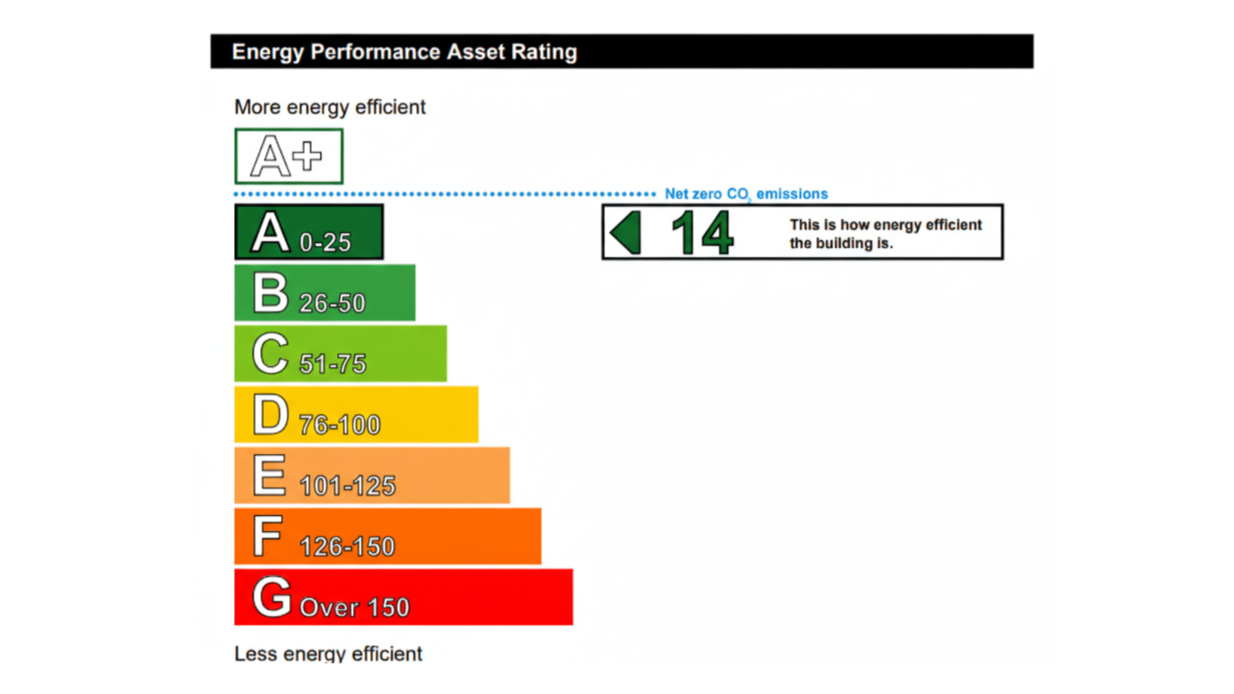
Beyond MEES Compliance: Why Assets Under 1,000m² Need an EPC B to Protect Value
Key Takeaways
Stronger Headline & Net Effective Rents: Removes tenant leverage to negotiate discounts while defending landlord pricing power.
Accelerated Leasing & Reduced Voids: Makes space more attractive to a wider pool of tenants and eliminates MEES lease-disruption risks.
Better Renewal Rates & Retention: Lowers occupier running costs to improve affordability and protect net rents.
Reduction in Service Charges for Multi-let Buildings: Cuts shared energy use to keep floorplates competitive on a total-cost basis.
Boosts Corporate ESG & Scope Reporting: Provides the Scope 1 & 2 carbon reduction data required by corporate occupiers.
Following the government’s interim MEES response of mandating an EPC B for buildings over 1,000m², whilst leaving those below to targeting an EPC E, many assume that those properties are safe.
Whilst they may be 'safe' from a legislative perspective, the commercial realities of settling for an EPC E could create a false sense of security, risking lower rents, reduced capital value, and accelerated asset obsolescence as future carbon standards tighten.
Instead, energy efficiency improvements deliver measurable value for an asset of any size, driving down operating costs while cutting carbon emissions.
Research from JLL demonstrates that a single-band improvement in an EPC rating yields a 3.7% increase in capital value and a 4.2% average rise in rental yield, proving that targeting higher energy performance directly enhances asset value.
Targeting EPC B: The Building Specifications That Drive Value
No matter the scale, properties are significantly more attractive to tenants, the higher the EPC rating, compared to a near equivalent property with a lower rating. To bridge the gap between a bare-minimum EPC E and a top-tier EPC B rating, asset managers should prioritise energy retrofits that directly impact carbon intensity and tenant comfort. These high-impact upgrades can include:
High efficiency LED lighting, controlled by PIR to save energy when not in use;
Efficient building envelope (including improving airtightness, high efficiency glazing and insulation);
100% electric heating and cooling systems (including Air Source Heat Pumps);
Removal of gas-operated systems
Targeting an EPC B rating unlocks significant commercial value, delivering key performance benefits across these essential building upgrades. When smaller properties aim beyond an EPC E, they unlock a cascade of operational and financial benefits.
Why Sub-1,000m² EPC E Properties Suffer from ‘Brown Discounts’
While sub-1,000m² commercial assets can legally remain at an EPC E, the property market heavily penalises low efficiency. High retrofit Capex relative to asset value, elevates small and medium enterprise tenant energy bills, and institutional buyer rejections drive a measurable brown discount. Buyers routinely deduct future upgrade costs directly from offering prices today, making EPC E properties much harder to sell.
Research conducted by Knight Frank, regarding carbon priorities and cost realities shows that high construction costs have shifted focus from new builds to deep refurbishments, however retrofitting older structures to an EPC B is technically challenging. This creates a severe shortage of energy efficient space. Landlords who upgrade now will attract top tenants and higher rents. Those who stick to low EPC ratings face steep discounts and empty units. This proves that even though spaces under 1,000m² only need an EPC E under planned updates to the MEES legislation, staying at the bare legal minimum seriously harms their market appeal and value.
Partner with HollenPlus to Future-Proof Your Sub-1,000m² Portfolio
Leveraging our deep expertise in commercial real estate, HollenPlus delivers strategic, value-driven EPC improvements to maximise your building’s energy rating. Before committing to expensive, disruptive upgrades, our accredited assessors undertake detailed energy modelling, using actual values to maximise the rating. Where suitable, we utilise Level 5 Dynamic Simulation Modelling (DSM) to further improve existing ratings. By running hourly, data-driven thermal simulations, we uncover hidden building performance, allowing you to secure higher EPC scores and avoid unnecessary Capex.
Protecting Asset Value Through Smart Retrofits
Settling for a legal minimum EPC leaves smaller commercial assets vulnerable to rent discounts and prolonged void periods. By targeting higher EPC ratings, landlord’s future-proof their properties, lower borrowing costs, and win tenant demand.
With HollenPlus, hitting your target rating doesn't mean overspending on capital improvements. Our precision using software such as Level 5 energy modelling uncovers hidden capacity in your building’s existing systems, delivering a cost-effective pathway to decarbonisation, operational efficiency, and protected asset value, no matter the building size.
Faced with the choice between an energy efficient EPC B property and an un-refurbished EPC E, occupiers will always choose the space that lowers their Total Cost of Occupancy. Proactive decarbonisation isn’t just a compliance exercise, it is one of the most effective strategies to drive long-term capital growth.
Is your asset ready for the shift? Contact HollenPlus today to explore how expert energy modelling and Level 5 Dynamic Simulation Modelling can lift your rating today.