
The Financial Case for ActiveScore: Boosting Asset Value Through Active Travel

ActiveScore Certification Logo
Discover how the ActiveScore certification enhances ESG credentials and drives asset value. Learn why active travel facilities are essential for modern UK office tenants.
At this pivotal moment, the path toward Net Zero has never been more vital. Achieving meaningful decarbonisation demands not only industrial shift, but a transformation in how we commute. With transport historically accounting for over a quarter of UK carbon emissions (DfT, 2019) implementing high-quality end-of-trip facilities is no longer just an amenity but is a core ESG strategy. By actively supporting cycling, walking, and running, commercial assets can directly reduce their Scope 3 emissions while simultaneously improving the health and wellbeing of everyday commuters.
At HollenPlus, we invest in modern ESG strategies that deliver measurable commercial returns. Through ActiveScore certification, we help clients achieve the highest standards for their buildings by promoting active travel through suitable infrastructure provisions.
What is ActiveScore?
ActiveScore is a global accreditation used to rate active travel provisions within buildings. It rewards high-quality facilities that ensure comfortable experiences for commuters and recognises that to attain sustainable long-term habits, having the availability to maintain equipment to a good standard is essential.
The scoring ranges from ActiveScore Certified to the highest ranking of Platinum 100.
To facilitate this shift toward becoming net zero and more active lifestyles, the ActiveScore Certification provides a global standard for buildings, assessing their ability to support active travel through three core pillars.
Infrastructure
A building must provide the ideal physical environment to make sustainable commuting possible and practical. This includes having high-quality facilities such as showers, secure locker spaces and dedicated bike storage. By additionally having maintenance stations and bicycle washing facilities, further ensures equipment remains in good condition and encourages a long-term behavioural change. Commuters are far more likely to abandon active travel if their experience is hampered by poor equipment or lack of support.
Occupier Engagement
Buildings and their amenities must connect with their users. By offering supportive services like “Bike Doctor” sessions, laundry services and commuter checklists, tenants can ensure users feel confident and knowledgeable about travelling more sustainably. These incentives reinforce a comfortable environment that turns a temporary choice into a long-term habit.
Future Proofing
As technology evolves, so must buildings and the facilities. A forward-thinking strategy includes adapting to new modes of travel such as e-bikes and e-scooters that are increasingly becoming more popular and accepted all over the world. By putting in the correct facilities in place today, assets remain relevant and supportive of new commuting trends.
The ActiveScore certification is assessed using these three pillars and ranked from 0-100.
ActiveScore in Commercial Real Estate
Buildings that have certifications, such as ActiveScore, contribute highly within commercial real estate. By obtaining a green and wellness certification often commands higher rents due to the high quality of facilities provided for its users. Along with meeting ESG targets, this standard also drives significant commercial value. High-quality active travel provisions increase asset desirability whilst also improving the well-being of tenants and users of the services. It is further recognised that buildings with high-quality sustainable infrastructure represent lower long-term risk and higher market value.
At HollenPlus, we have seen first hand the benefits of delivering the ActiveScore accreditation. When HollenPlus undertook an asset repositioning strategy at CastleMead, Bristol, we decided to deliver comprehensive end of journey facilities within the basement area, including world-class cycling facilities. This resulted in targeting and achieving the world’s first ActiveScore Platinum 100 certification. These amenities were key drivers in the overall repositioning of Castlemead, Bristol and led to a 25% uplift in ERV and headline rent directly attributable to the works.
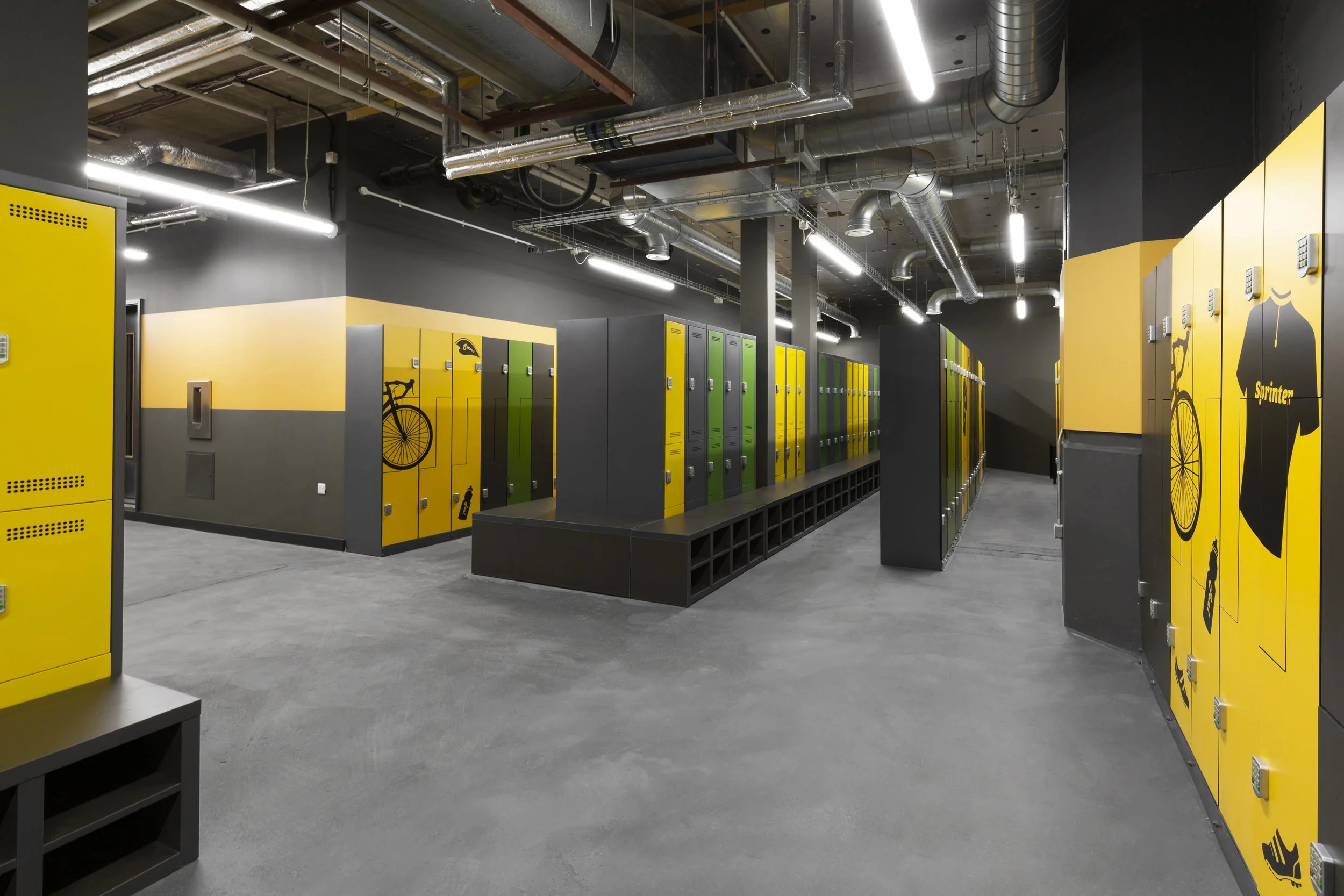
Basement active-travel amenities, Castlemead, Bristol