
Solar as a Value-Add Strategy - The Business Case for Commercial Real Estate l HollenPlus
Solar is no longer a peripheral "green" asset; it is a primary lever for value creation.
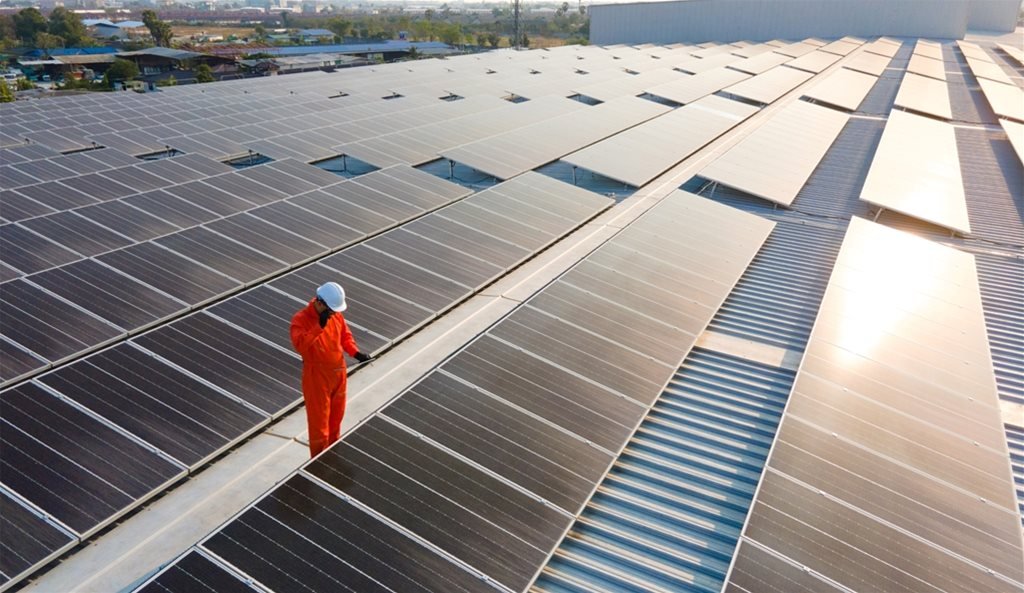
Solar as a Value-Add Strategy
With IRR’s of 20% - 30% and payback periods now often under 4 years, the economics of solar have reached a tipping point. Solar returns are now too significant to ignore and present the perfect value-add strategy.
Since 2016, there has been a:
• 90% drop in solar panel costs
• 75% reduction in total installation prices
• 67% increase in efficiency
• Payback periods under 4 years
Furthermore, with the rise of CAPEX-free installation models, landlords can now improve NOI, energy performance, EPC and asset value without the upfront cost.
Whatever the driving force for the initial installation, solar delivers a multitude of additional benefits, such as:
• Additional revenue and improved NOI
• Lower cost energy for tenants, increasing renewal likelihood for existing tenancies
• Improved let-ability for vacant units
• The perfect tool for securing lease re-gear opportunities
• Improved EPC rating with associated benefit to rental value
• Solving power availability challenges
Why Solar is the Ultimate Asset Management Lever in 2026
We expect 2026 to be the year where assets managers and owners realise the financial opportunity that solar now presents, and start capturing it on a large scale.
As we navigate into 2026, with payback periods often under 4 years, the question for asset managers is no longer whether solar is a viable sustainability initiative, but rather how much capital value they are leaving on the table by leaving their roofs empty.
With energy price volatility remaining a structural risk and the cost of technology hitting new lows, solar has moved from a compliance-led cost to a value-enhancing strategy.
1. The 2026 Economic Reality: Lower CAPEX, Higher Performance
The financial landscape for solar has been transformed over the last decade. Three factors have redefined the ROI:
90% Reduction in Solar Panel Costs: Since 2016, the global cost of solar panels has plummeted. Even with recent inflation in labour and materials, the total installed cost per kW for commercial systems has dropped by over 50% in the last 10 years.
67% Increase in Efficiency: Over the last decade, panel efficiency has increased by 67% (from 15% to 25% efficiency). A commercial roof today generates significantly more power per square meter than it did a decade ago, making smaller urban roofs financially viable for the first time.
Battery Storage: By utilising solar battery storage, assets can now capture, store and then use energy at a time to suit the occupier. This has a significant financial benefit, as the power generated can be sold to the tenant at the agreed level, rather than exported to the grid at a fraction of the price.
2. Valuation: Changing Perceptions
The additional income stream generated from solar has historically been valued at a significant discount, often at 8% Net Initial Yield, to the rental income from the traditional lease. Valuers applied this risk premium to solar income to reflect the uncertainties around the income at the time. This held back investment, adoption and hampered returns.
Fast forward to 2026, and UK valuers are increasingly recognising solar income as a stabilised revenue stream. When calculating the valuation impact, we look at two primary drivers:
Valuing the Income
Whether through a Power Purchase Agreement (PPA) or direct tenant recharge, solar income is typically more stable than standard commercial rent.
Yield Treatment: The historic risk premium attached to solar income has now reversed, and is often either removed entirely, or in many cases, leads to overall yield compression, benefitting capital value.
NOI Improvement: Depending upon the type of building and letting profile, there are several ways in which solar income can benefit NOI. Every £50,000 of energy generated and sold to the tenant, creates a £1,000,000 capital value improvement at a 5% exit yield.
3. Asset Management: Re-gears, Renewals, and "Green" Leases
Solar presents the perfect opportunity to add value through active asset management. Opening tenant discussions and negotiating lease re-gears, extensions and renewals provides both rental and capital value appreciation.
Lease Re-gears: Landlords can offer to install solar in exchange for a re-gear, usually involving an extension and rent increase. This provides the tenant with lower, fixed energy costs while the landlord secures longer-term income.
Renewal Strategy: In a competitive market, solar-integrated buildings have higher "stickiness." Tenants are less likely to vacate a property where their energy costs are 10% -20% below the market average.
The "Green" Lease: Modern 2026 lease structures now include clauses for data sharing and renewable energy procurement. Solar allows landlords to fulfill these obligations while simultaneously increasing the building’s capital value.
4. EPC Improvement
Solar systems generate significant improvements in EPC ratings. Industrial & Logistic assets can secure EPC A+ EPC rating with a correctly sized solar installation. Office buildings can improve a B rating to an A rating with a correctly sized solar installation.
For assets with EPC ratings below a B, solar presents an extreme cost-effective opportunity to ensure MEES compliance beyond the 2030 deadline to meet EPC B.
The HollenPlus Perspective
The "business case" for solar has officially evolved into the "valuation case." With payback periods for commercial systems now as low as 4 years, the technology pays for itself within the first half of a 10-year commercial lease.
At HollenPlus, we specialise in navigating this intersection of technical feasibility, increasing NOI, improving capital values, total returns and maximising the environmental benefit and EPC.