Residential Portfolio Retrofit & MEES Strategy:
Navigating the Home Energy Model (HEM)

Under updated UK PRS MEES Regulations and the SRS Decent Homes Standard, residential portfolio owners face stricter building performance enforcement.
Navigating the transition from RdSAP to the Home Energy Model (HEM) creates complex operational challenges for social housing providers, institutional landlords, BTR operators, and private asset managers.
At HollenPlus, our RICS Chartered Surveyors deliver archetype modelling, risk profiling, and phased investment planning to protect portfolios against regulatory default, safeguard capital, and unlock substantial procurement value.
Key Differences: RdSAP vs Home Energy Model (HEM)
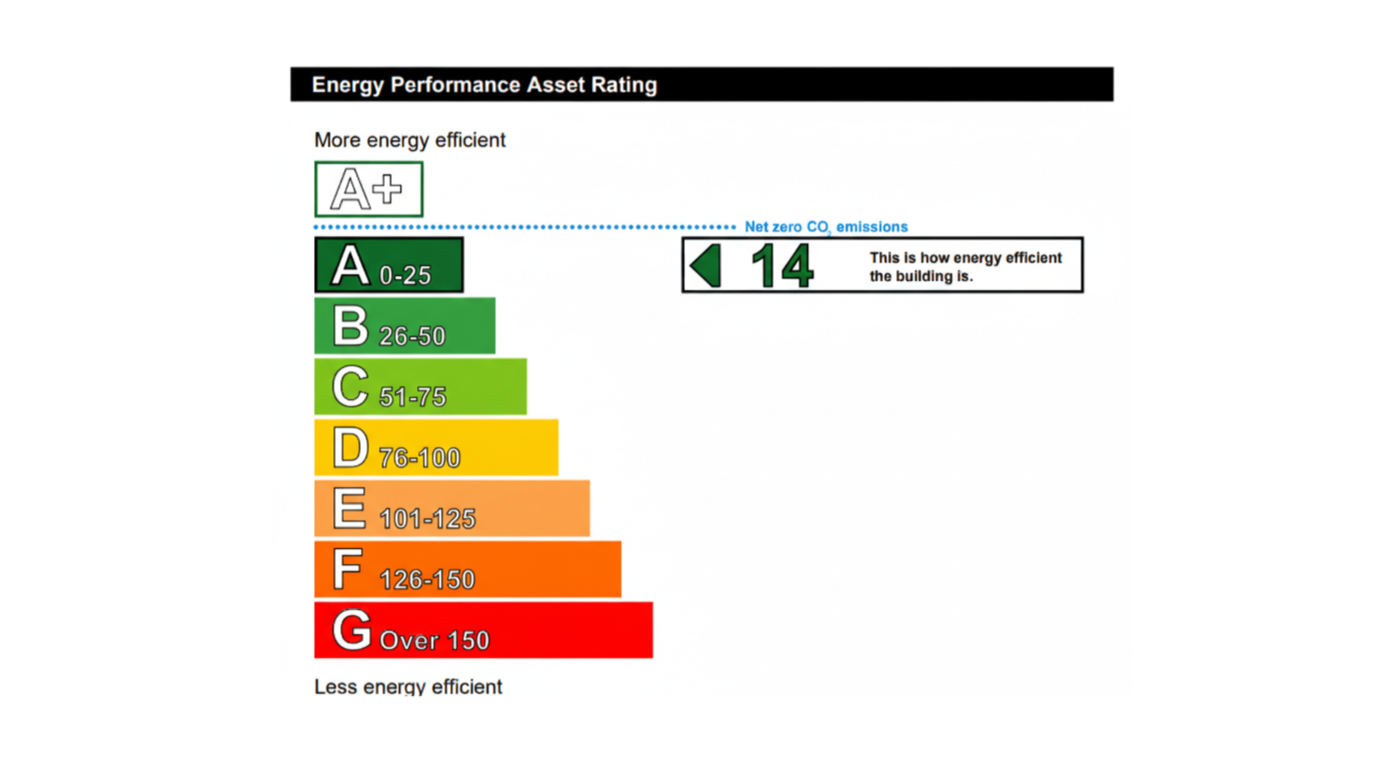
The transition from RdSAP to the Home Energy Model (HEM) represents a fundamental shift from a static fuel-cost index to dynamic, carbon-focused building simulation.
| Feature / Metric | Legacy RdSAP Framework | Home Energy Model (HEM) |
|---|---|---|
| Primary Evaluation Metric | Fuel Cost (£): Driven by estimated running costs, often penalising clean electricity over fossil gas. | Carbon & Energy Performance: Evaluates carbon intensity, fabric thermal retention, and smart readiness. |
| Calculation Engine | Static Monthly Averages: Based on standardized, steady-state monthly heating and weather assumptions. | Dynamic 30-Minute Timesteps: Simulates real-time thermal physics and occupancy every half-hour. |
| Heating System Impact | Gas-Favoured: Heat pumps penalised due to higher per-kWh electricity tariffs despite lower carbon. | Carbon-Weighted: Heavily penalises carbon-intensive fossil fuel boilers and inefficient direct-electric heating. |
| Smart Tech & Storage | Unrecognised: Zero benefit assigned to smart controls, battery storage, or dynamic tariffs. | Fully Integrated: Explicitly rewards peak load-shifting, solar PV generation, and battery storage. |
Dual-Sector Legislative Drivers: PRS vs SRS Frameworks
Private Rented Sector (PRS) Mandates
Private landlords and institutional asset managers are governed by statutory Domestic Minimum Energy Efficiency Standards (MEES). Proposed legislative trajectories target an EPC Band C baseline across new tenancies and roll out across all existing lettings.
Key Risk: Inability to legally market or let non-compliant residential assets, leading to immediate void losses, rent collection interruptions, and valuation haircuts during refinancing or exit.
Capital Protection: Maximising statutory cap exemptions and executing pre-2029 RdSAP lock-in strategies to maintain lettable status without unviable capex exposure.
Social Rented Sector (SRS) Frameworks
Social Housing Providers, Housing Associations, and Local Authorities are bound by the revised Decent Homes Standard (DHS) and integrated SRS MEES performance benchmarks.
Key Trigger: Mandatory compliance evaluated at institutional audit levels, tied directly to statutory provider ratings, regulatory oversight, and grant eligibility.
Funding Integration: Direct alignment with government co-funding frameworks, including the Warm Homes: Social Housing Fund, to subsidise fabric-first upgrades.
The Home Energy Model (HEM) Transition
The phase-out of traditional RdSAP in favour of the Home Energy Model (HEM) replaces static, single-figure EPC ratings with dynamic 30-minute timestep simulations evaluated across three distinct performance pillars:
Fabric Performance Metric: Focuses on pure thermal envelope retention (insulation, glazing, air tightness), preventing landlords from relying solely on cheap heating swaps to pass.
Heating System Metric: Evaluates carbon intensity and generation efficiency, heavily penalising carbon-intensive fossil fuel systems and inefficient direct-electric heating.
Smart Readiness Metric: Assesses building capacity for energy storage, peak load-shifting, and integration with dynamic Time-of-Use tariffs.
Home Energy Model (HEM) Three-Pillar Framework
1. Fabric Metric
Pure thermal envelope retention (insulation, glazing, air tightness). Prevents reliance on quick heating swaps.
2. Heating System Metric
Carbon intensity and generation efficiency. Penalises fossil fuels and inefficient direct-electric heating.
3. Smart Readiness Metric
Energy storage capacity, peak load-shifting potential, and integration with dynamic Time-of-Use tariffs.

Phased Compliance & Cost Protection Strategies
To prevent unnecessary capex spikes, our advisory frameworks leverage built-in statutory protections across both sectors:
1. Pre-2029 Grandparenting & RdSAP Lock-In
Any residential asset achieving a verified EPC Band C under current RdSAP rules prior to late 2029 secures a 10-year grandparenting protection window. This allows landlords to lock in statutory compliance for a decade, bypassing complex HEM dynamic simulation requirements until 2039.
2. Statutory Spend Caps & Exemption Management
For properties where achieving EPC Band C requires unviable capital expenditure:
PRS Financial Caps: Registration of statutory high-cost exemptions on the central PRS register when qualifying energy efficiency improvements exceed statutory cap thresholds.
SRS Spend Limits: Strategic alignment where matched grant allocations (such as Warm Homes funding) count directly towards statutory investment ceilings, shielding social housing providers from uncapped capital expenditure.
Sector-Specific Portfolio Retrofit Pathways
Strategic compliance pathways tailored to specific residential sub-sectors, balancing MEES vulnerabilities against targeted capital deployment.
| Residential Sub-Sector | Primary MEES & HEM Vulnerability | Strategic Compliance Solution |
|---|---|---|
| Private Rented (PRS) Individual Lettings | High void risk; single-property contractor overheads. | Low-cost RdSAP lock-in prior to 2029; targeted insulation upgrades. |
| Build-to-Rent (BTR) & Multi-Unit Blocks | Complex central HVAC/heating plant; communal energy penalty. | Dynamic Simulation Modelling (DSM); smart readiness & sub-metering strategies. |
| Social Housing (SRS) Estates | Large-scale heritage & solid-wall stock; tenant fuel poverty risks. | Archetype-led bulk procurement; Warm Homes grant co-funding. |
| Student Accommodation (PBSA) | Heavy resistive electric panel heating; peak load penalties. | Smart thermal controls, battery storage, and fabric envelope optimisation. |
Strategic Procurement: Unlocking 20% + CAPEX Savings
Whether managing 500 private Build-to-Rent (BTR) units or 10,000 social housing assets, piecemeal, single-dwelling works drain capital reserves. HollenPlus structures aggregated archetype procurement packages to eliminate fragmented contractor margins.
Isolated Property Works: High contractor overheads, fragmented project management, and elevated margin stacks driving up the cost per unit.
Aggregated Portfolio Packages: Regional bulk procurement grouping shared architectural archetypes, unlocking 20% + CAPEX savings vs individual projects.
By grouping stock into common architectural archetypes across regional clusters, we enable landlords and housing providers to tender bulk measure installations, consistently achieving 20% + CAPEX reductions.
FAQs
-
The Home Energy Model (HEM) is the UK Government’s next-generation calculation methodology replacing Reduced Data Standard Assessment Procedure (RdSAP) for residential energy assessments. Unlike RdSAP's static annual energy rating, HEM uses dynamic 30-minute timestep simulations to evaluate a dwelling's thermal fabric performance, heating system efficiency, and smart energy readiness under real-world operational conditions.
-
Private Rented Sector (PRS) portfolios are governed by point-of-letting Minimum Energy Efficiency Standards (MEES) requiring compliance to grant new leases or maintain existing tenancies. Social Rented Sector (SRS) properties are regulated under the updated Decent Homes Standard (DHS) and SRS MEES frameworks, where portfolio-wide compliance is evaluated during institutional audits and tied directly to grant funding eligibility.
-
Yes. Neither PRS nor SRS MEES regulations impose a blanket ban on operational gas boilers by 2030. Under the Home Energy Model (HEM) framework, if a gas-heated dwelling struggles to achieve an EPC Band C on the Heating System metric, compliance can still be achieved by meeting the threshold on either the Fabric Performance or Smart Readiness metrics.
-
The grandparenting provision allows any residential property that secures a valid EPC Band C under current RdSAP methodology prior to the official HEM transition in late 2029 to maintain its legal compliance status for the full 10-year lifespan of that certificate. This delays mandatory HEM dynamic simulation upgrades until the certificate expires in 2039.
-
The Home Energy Model evaluates residential properties across three distinct pillars:
Fabric Performance Metric: Measures building envelope heat retention, insulation, and air tightness.
Heating System Metric: Measures carbon intensity, generation efficiency, and fuel source.
Smart Readiness Metric: Measures battery storage capacity, peak load-shifting capability, and smart grid integration.
-
Under domestic PRS MEES regulations, landlords are required to invest up to the statutory cap threshold (historically £3,500, with proposed expansions to £10,000) towards qualifying energy efficiency improvements. If a property remains below EPC Band C after spending the maximum statutory cap, the owner can register a valid 5-year high-cost exemption on the central PRS register.
-
For social housing providers and local authorities, third-party government grants such as the Warm Homes: Social Housing Fund (formerly SHDF) can be co-funded alongside internal capital. Grant funding applied directly to fabric-first upgrades counts toward statutory landlord expenditure ceilings, protecting capital reserves while fulfilling Decent Homes Standard obligations.
-
Archetype modelling categorises large residential property portfolios into shared architectural typologies based on age, construction type, wall structure, and heating layout. Rather than conducting individual, piecemeal assessments, archetype-led procurement enables bulk tendering for standardised insulation and heating measures, yielding up to 20% capex savings.
-
Build-to-Rent (BTR) schemes and multi-unit residential blocks face distinct risks under the Home Energy Model (HEM) due to communal heating infrastructure, central plant rooms, and shared circulation spaces. Under updated dynamic assessment rules, uninsulated distribution pipework and inefficient central heating systems can trigger severe block-wide rating penalties, making Dynamic Simulation Modelling (DSM) essential to safeguard asset valuation prior to committing capital.
-
To keep their costs low, volume EPC assessors often rely on tick-box EPC software defaults that artificially penalise and lower ratings and consequently drive up their clients CAPEX costs.
HollenPlus does the exact opposite. Our professional approach goes the extra mile to find every piece of data available to maximise initial ratings. We then combine this with advanced dynamic modelling and vast asset management expertise, to find the most sensible, logical, commercially viable upgrade options.
This ensures your MEES and HEM strategy is commercially viable, aligned with property valuations, and engineered to protect portfolio returns and capital value without over-specifying works.
Speak to a Partner today about your residential portfolio retrofit projects…