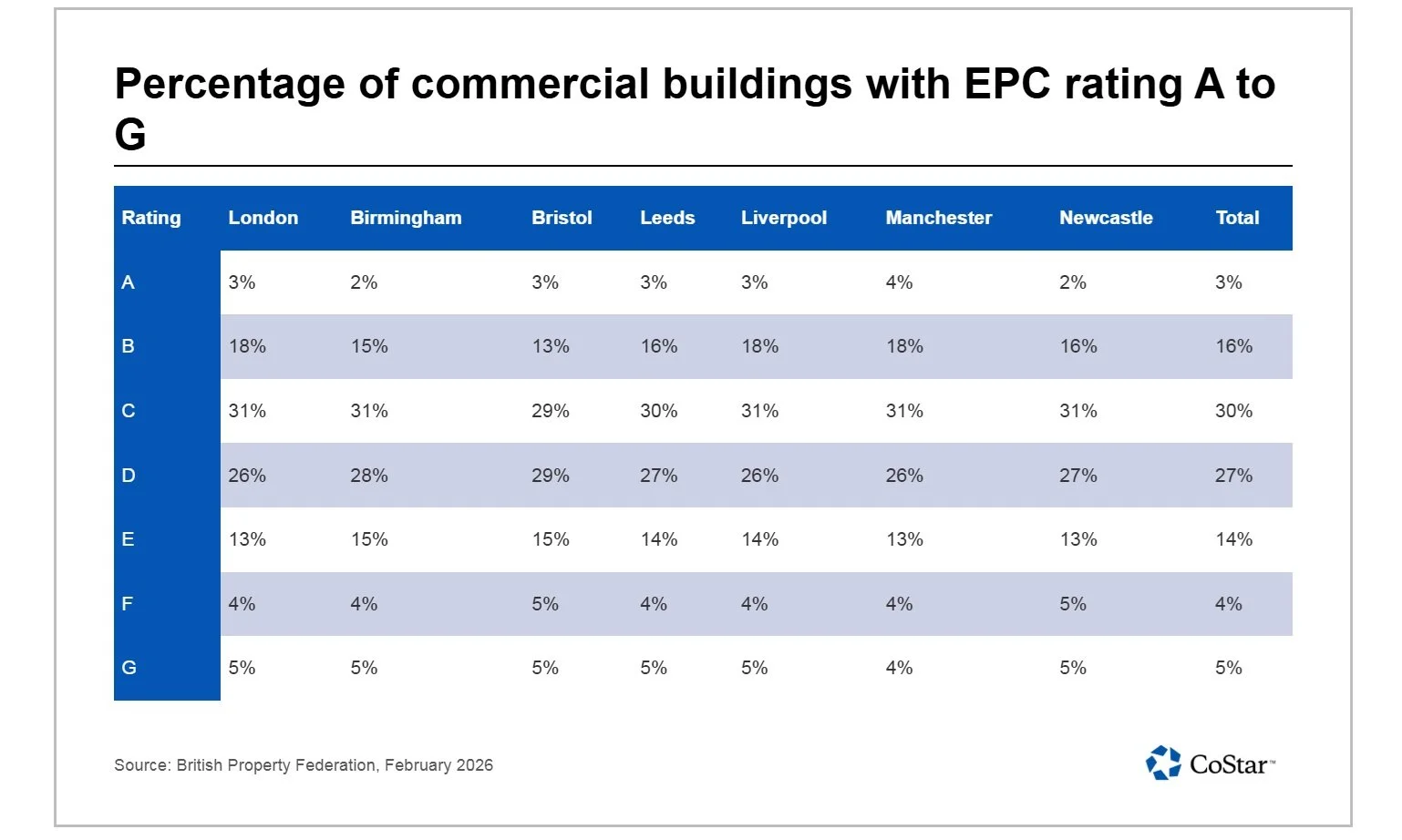
· Only 19% of buildings in our major cities have achieved EPC B or better. · 9% of buildings have not yet met MEES requirements, and are at risk of being fined. https://lnkd.in/eQxevdDg
These figures align very closely with HollenPlusdata analysis on a national scale.
HollenPlus delivers cost-effective EPC strategy and solutions, specifically focused on improving returns, for portfolios and individual assets across the UK.
Regardless of delayed Government reviews, landlords are being rewarded for delivering EPC A and B space by tenants, who are willing to pay a significant rental premium for the best space. Research from JLL found that for each EPC band improvement (e.g. C->B) there is a 4.2% increase in rents achieved and a 3.7% increase in capital value achieved. https://lnkd.in/eTcU9iSQ
The 2030 Compliance Gap: Why the 81% Figure Matters
The revelation that 81% of UK commercial buildings fall below the proposed EPC B mandate is more than just a statistic; it represents a significant looming challenge for the entire real estate sector. Failing to address this gap early creates three interconnected risks for asset owners.
1. The Looming Build Cost Inflation
As the 2030 deadline approaches, the industry is forecasting a massive surge in demand for retrofitting works. This bottleneck will likely lead to significant spikes in build costs as labour and high-efficiency materials become scarce. Waiting until the deadline draws near means competing for a limited pool of contractors, potentially driving project costs far beyond current budget estimates.
2. The Financial Reality of Stranded Assets
Buildings that remain below the EPC B threshold risk becoming stranded assets. If a property cannot legally be let due to non-compliance, its revenue stream disappears, leading to severe "brown discounts" in valuation. Investors are already scrutinising portfolios for these risks; assets without a clear, costed pathway to a B rating are increasingly seen as liabilities rather than opportunities.
3. The Advantage of Proactive Value Creation
While the 81% figure is daunting, it provides a unique opportunity for early movers to secure a "green premium." By upgrading assets now, owners can attract high-calibre tenants who are required to find space that meets their own corporate ESG targets. To understand why waiting is a strategy for depreciation, you can read our more in-depth guide on why it pays to Be Proactive with ESG.
Recommended Actions
1. Refresh EPC’s undertaken before April 2022 to create the current baseline position, ensuring the most recent carbon factors are used.
2. Ensure you have a strategy in place which includes:
· A thorough review of the available options · The practicalities of upgrading portfolios and buildings · CAPEX costs and phasing of works · Lease events & future tenant specification expectations · Service charge budgets and caps and · Renewable energy.
3. Sit back and enjoy the improved returns from delivering best in class space!!
Contact us to discuss how to achieve MEES compliance and improve returns today…