Circular Economy Statements for Planning & BREEAM

HollenPlus delivers statutory Commercial Circular Economy Statements for institutional asset managers, property funds, and commercial developers across England. We streamline planning approvals, including London Plan Policy SI 7 mandates, by translating complex resource-efficiency requirements into actionable, value-adding strategies.
By pairing early-stage pre-demolition audits with material lifecycle modelling, HollenPlus ensures major developments and deep retrofits achieve rapid planning consent while reducing embodied carbon, protecting Capex and enhancing long-term commercial portfolio value.
Statutory Circular Economy Statements for Commercial Portfolios & Planning
HollenPlus delivers statutory Circular Economy Statements designed to align complex planning mandates with long-term commercial real estate performance. As local planning authorities enforce increasingly strict sustainability metrics under the London Plan Policy SI 7, securing planning consent requires a transparent, auditable resource efficiency strategy. We work alongside institutional asset managers, property funds, and commercial developers to de-risk major planning applications and deep retrofits. By embedding circular economy principles from the outset, we eliminate planning delays while optimising material lifecycles, reducing embodied carbon and protecting long-term commercial yield across your asset portfolio.
Navigating Policy SI 7 and Local Planning Authority Mandates
Under the London Plan Policy SI 7 ‘Reducing waste and supporting the circular economy’ all major referable developments in London must be supported by a comprehensive Circular Economy Statement and more local planning authorities across England and Wales are also rapidly adopting this requirement. Meeting these requirements demands more than a generic compliance checklist and instead requires technical precision across pre-application, detailed submission and post completion monitoring stages.
Policy SI 7 states that a Circular Economy Statement should be submitted to demonstrate:
how all materials arising from demolition and remediation works will be re-used and/or recycled
how the proposal’s design and construction will reduce material demands and enable building materials, components and products to be disassembled and re-used at the end of their useful life
opportunities for managing as much waste as possible on site
adequate and easily accessible storage space and collection systems to support recycling and re-use
how much waste the proposal is expected to generate, and how and where the waste will be managed in accordance with the waste hierarchy
how performance will be monitored and reported.
HollenPlus can de-risk your planning applications by taking complete ownership of local authority mandates. We establish auditable material intensive baselines, justify structural retention and commit to key statutory targets, including driving at least 95% of construction and demolition waste away from landfill. By engaging early in RIBA stages 1-3, we ensure your development satisfies regional circularity thresholds, avoids costly planning conditions and moves smoothly from submission to sign-off.
Comprehensive Circular Strategy Across the Development Lifecycle
Embedding circular principles requires technical rigor at every phase of the asset lifecycle. HollenPlus transforms statutory requirements into structured, actionable deliverables that align design teams, structural engineers and main contractors with institutional ESG standards.
Our lifecycle framework covers four technical audit modules:
Pre-Demolition and Refurbishment Audits: Before works commence, we conduct detailed site assessments to identify high-value materials for retention, reclamation or local reuse - targeting a minimum 95% diversion of construction and demolition waste from landfill.
Design for Longevity and Disassembly: We collaborate with design teams during RIBA Stages 1-3 to specify flexible floorplates, modular components and mechanical fixings that allow building elements to be cleanly adapted, upgraded, or deconstructed at end-of-life.
Sustainable and Recycled Material Specification: We establish baseline material intensity metrics (kg/m2) and set clear thresholds for secondary aggregates, recycled steel and responsibly sourced bio-based materials to lower primary resource consumption
Operational Waste and Lifecycle Tracking: We design high-capacity waste and recycling strategies for occupation while establishing post-completion monitoring plans to verify that circular commitments are maintained throughout the buildings operational life.
Unlocking Portfolio Value Beyond Baseline Planning Compliance
A statutory Circular Economy Statement should do more than check a municipal planning box, it must actively drive asset performance, improve ESG benchmarks and safeguard fund liquidity. HollenPlus embeds circularity directly into your wider commercial strategy, turning mandatory compliance into an engine for long- term portfolio value:
BREEAM, LEED and GRESB Elevation: Circular data directly unlocks critical BREEAM credits (Mat 01 Life Cycle Impacts, Mat 03 Responsible Sourcing, Wst 01 Waste), LEED Materials & Resources points, and boosted GRESB Real Estate Assessment scores required by institutional fund covenants.
Direct Interlink with Whole Life Carbon Assessment ( WLCA): The Circular Economy strategy provides the physical material choices, such as structural retention and secondary aggregates, while your WLCA calculates the resulting reduction in embodied carbon across modules A-D.
MEES & Portfolio Value Protection: Early structural retention supports cost-effective pathways to mandatory EPC band B targets, futureproofing assets against resource transition risks and protecting exit yields during institutional divestment.
Practice Interventions
To meet London Plan Policy SI 7 targets while maximising asset value, design and engineering teams must make deliberate interventions to both the building’s structure and its material specification. HollenPlus provides technical guidance across key spatial and material strategies, for example:
Structural Core and Frame Retention
Mechanical & Dry-Fix Connections
Flexible & Adaptable Floorplates
Standardisation and Modularity
Material Specifications
High Recycled Content Steel & Aggregates
Responsibly Sourced Timber & Bio-Based Insulation
Reclaimed & Salvaged Internal Finishes
Finishes with High Circularity Credentials
We work alongside structural engineers, architects and cost consultants during RIBA Stages 1-3 to build these specific interventions directly into project specifications. This ensures full compliance with statutory Policy SI 7 metrics, earns high-value BREEAM Mat/01/Mat 03 credits, and delivers an auditable material inventory for long-term portfolio management.
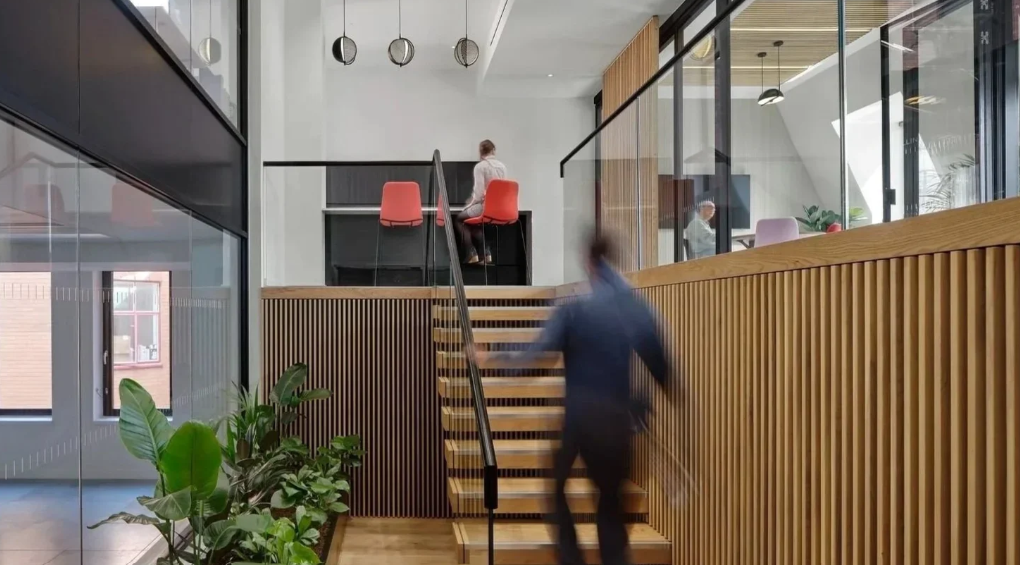
Policy SI 7 in Practice

Sustainability Services for 8 Bishopsgate
HollenPlus was appointed to provide a Circular Economy Statement for 8 Bishopsgate in the City of London as part of an 85,000 sq.ft CAT B tenant fit-out of the 10th-15th floors.
The fit-out works applied each circular economy principle. Not only had the design met all minimum criteria, but also achieved most of the aspirational targets. This includes:
Reduce material use
Reuse materials
Select sustainable materials
Design for robustness
Design for flexibility and adaptability
Design for disassembly
Reduce waste in construction
Apply best practice waste management practices during fit-out works
Design for good waste procedures in operation
Why Partner with HollenPlus for Your Circular Economy Strategy
Securing planning approval for your major commercial development, while optimising asset yield requires more than standard environmental consultancy- it demands commercial property expertise. HollenPlus pairs chartered surveyor insight with technical sustainability specialism to deliver audit-ready Circular Economy Statements tailored to institutional portfolios.
Integrated Sustainability Frameworks: We are able to seamlessly link your Circular Economy Statement with Whole Life Carbon Assessments (WLCA), BREEAM credits and MEES compliance to avoid redundant work and reduce total consultancy spend.
Proactive Planning Strategy: From pre-application engagement through to post- completion reporting, we manage local planning authority queries directly, keeping your development timeline on track.
By uniting statutory planning requirements, technical engineering feasibility, and commercial asset management under one point of advisory, HollenPlus removes the friction between regional sustainability mandates and fund performance. We ensure your development satisfies strict local planning officers while actively protecting project timelines, Capex budgets and institutional asset valuations.
FAQs
-
A Commercial Circular Economy Statement is a statutory report that outlines how a development will minimise resource consumption, eliminate operational waste, and keep materials at their highest value throughout its lifespan. It evaluates structural retention, pre-demolition audits, material intensity (kg/m2), design for disassembly, and post-occupancy waste management strategies.
-
Under London Plan Policy SI 7, a statement is mandatory for all major developments referable to the Mayor of London. Additionally, an increasing number of Local Planning Authorities (LPAs) across England and Wales now require circularity reports as part of local validation lists for major commercial schemes and deep retrofits.
-
While both are key sustainability submissions, a Circular Economy Statement focuses on material efficiency, resource flows, and waste elimination. A Whole Life Carbon Assessment (Policy SI 2) measures total carbon emissions (KgCO2e) across the building's year lifespan. They work synergistically: circular material choices directly reduce the embodied carbon calculated in the WLCA.
-
Data and material audits compiled for your statement directly feed into certification credits. For BREEAM, this includes credits under Mat 01 (Life Cycle Impacts), Mat 03 (Responsible Sourcing), and Wst 01 (Construction Waste Management). For LEED, it satisfies key prerequisites within the Materials & Resources (MR) category.
-
Yes. The Global Real Estate Sustainability Benchmark (GRESB) heavily rewards asset managers who implement verified resource management, waste diversion, and embodied carbon reduction frameworks across their development pipeline. A standardised circular strategy directly supports institutional ESG reporting and green debt financing covenants.
-
Designing for flexibility, modularity, and easy disassembly reduces future capital expenditure during tenant fit-outs and building refurbishments. It mitigates physical resource risks, prevents premature functional obsolescence, and aligns with MEES regulations to maintain premium asset valuations upon institutional exit.
-
A pre-demolition audit assesses existing buildings on site prior to redevelopment. It identifies structural elements, facade panels, and internal fixtures that can be retained, refurbished on-site, or reclaimed for local secondary markets, helping achieve target waste diversion rates of 95%+ away from landfill.
-
We recommend engaging HollenPlus early during RIBA Stage 1 (Concept Design) or Stage 2 (Concept Design/Pre-App). Early integration ensures structural engineers and architects can incorporate material retention and design-for-disassembly principles before planning applications are finalised.
-
Circular Economy commitments carry through to post-construction. Local planning authorities typically require a Post-Completion Update (prior to occupation) to verify that the target waste diversion rates, recycled content thresholds, and material intensity metrics set during planning were actually achieved on site.
-
HollenPlus combines chartered surveyor commercial and technical sustainability expertise. We do not treat compliance as a standalone "box-ticking" exercise; we strategically align your planning submissions with BREEAM targets, Whole Life Carbon metrics, and commercial exit yields to maximise fund value.



Speak with a member of the HollenPlus team to align your planning requirements with portfolio value today…