GRESB Consultancy for Real Estate Funds & Asset Managers

HollenPlus provides specialist GRESB consultancy, assessment support and sustainability reporting services for commercial property investors, fund managers, landlords and asset managers across the UK and Europe.
We combine chartered surveying expertise, commercial real estate asset management experience and technical building performance analysis to help clients strengthen their GRESB submissions, improve ESG data quality and identify practical opportunities for portfolio decarbonisation.
Our approach goes beyond annual reporting. We translate sustainability data into commercially focused strategies that improve building performance, inform capital expenditure decisions and support long-term asset value.
Discuss Your GRESB Requirements: Speak to HollenPlus
What is GRESB and Why Does It Matter for Real Estate Investors?
GRESB, formerly known as the Global Real Estate Sustainability Benchmark, is an investor-driven sustainability assessment and benchmarking framework used by real estate companies, investment managers and property funds worldwide.
The GRESB Real Estate Assessment evaluates sustainability management, operational building performance and development activities, enabling participating organisations to benchmark their performance against relevant peers.
For institutional property investors, GRESB provides a structured approach to understanding environmental, social and governance performance across real estate portfolios.
Participation helps investors and asset managers:
Benchmark sustainability performance against industry peers.
Demonstrate ESG management and reporting practices to investors.
Identify weaknesses in energy, carbon, water and waste data.
Understand property-level climate and transition risks.
Prioritise opportunities for energy efficiency and decarbonisation.
Strengthen transparency, stakeholder engagement and investment reporting.
At HollenPlus, we believe GRESB should help drive better investment decisions and measurable improvements across your portfolio. It is much more than an annual reporting exercise.

From GRESB Reporting to Real Asset Performance
Better data is the starting point. Better buildings are the objective.
GRESB reporting is most valuable when its findings are connected to investment decisions and the day-to-day management of commercial property.
Unlike consultants focused primarily on ESG disclosure, HollenPlus combines commercial asset management expertise with detailed technical knowledge of buildings and their energy systems.
This allows us to investigate the underlying reasons for poor asset performance and recommend practical, cost-effective improvements.
Energy Efficiency & Operational Carbon
We assess opportunities to improve the operational energy performance of commercial buildings through energy modelling, HVAC optimisation, lighting improvements, controls, metering and renewable energy.
Our technical capabilities help clients identify realistic opportunities to reduce energy consumption and associated greenhouse gas emissions.
CRREM & Portfolio Decarbonisation
We use the Carbon Risk Real Estate Monitor (CRREM) methodology to assess asset-level carbon transition risks and identify where buildings may become misaligned with relevant decarbonisation pathways.
We translate this analysis into practical asset management strategies, helping owners prioritise expenditure in line with refurbishment opportunities, plant replacement cycles, leasing events and investment horizons.
EPC, MEES & Regulatory Risk
We review existing Energy Performance Certificates, Minimum Energy Efficiency Standards compliance and prospective regulatory risks across commercial property portfolios.
Although EPC ratings and GRESB operational performance are different measures, understanding both can support a more complete approach to energy efficiency, capital expenditure planning and asset risk management.
BREEAM & Sustainable Refurbishment
Our BREEAM Assessor and Advisory Professional capabilities enable us to support the sustainability performance of building refurbishments and developments.
We help clients identify appropriate certification opportunities while evaluating the commercial implications of proposed building improvements.
Our GRESB Consultancy & Reporting Services
We provide flexible GRESB assessment support, from an initial readiness review through to annual data preparation, submission coordination, results analysis and longer-term improvement planning.
GRESB Readiness Assessments & Gap Analysis
For first-time participants and existing GRESB reporting entities, we review the available information against the applicable Real Estate Assessment requirements.
Our services include reviewing reporting boundaries, management policies, building performance data, environmental targets, existing certifications and supporting evidence.
We identify missing information, potential validation issues and opportunities to improve reporting quality, providing a prioritised action plan ahead of the next assessment.
GRESB Data Collection, Review & Validation Preparation
Reliable asset-level data is central to effective GRESB reporting.
We help property owners, fund managers and managing agents collect, organise and review sustainability information across individual buildings and entire portfolios.
This includes operational energy consumption, greenhouse gas emissions, water use, waste management, building certifications and relevant tenant information.
We also review data completeness, reporting boundaries, ownership periods and the treatment of estimated consumption, helping clients prepare consistent information for the GRESB assessment and its formal validation process.
GRESB Assessment & Submission Support
HollenPlus supports clients with the preparation and coordination of their annual GRESB Real Estate Assessment submissions.
We work with asset managers, ESG teams, property managers and other stakeholders to consolidate relevant portfolio information, coordinate supporting evidence and address identified reporting gaps.
Our support can cover the Management, Performance and Development Components, according to the reporting entity's circumstances and applicable assessment requirements.
By combining technical property knowledge with a structured reporting process, we aim to reduce the administrative burden on investment teams and improve the accuracy and completeness of submissions.
GRESB Score Review & Improvement Strategies
Achieving a stronger GRESB result requires understanding both the assessment methodology and the operational performance of the underlying assets.
We review existing GRESB results, identify areas of underperformance and develop targeted improvement strategies.
These may include enhancing energy data coverage, strengthening sustainability management practices, improving tenant engagement, reviewing relevant building certifications and developing asset-level decarbonisation programmes.
Our objective is to identify improvements that are both relevant to GRESB and commercially beneficial to the portfolio, rather than pursuing reporting outcomes in isolation.
GRESB Portfolio Benchmarking & Investor Reporting
We help asset managers translate GRESB results into meaningful information for investment committees, fund stakeholders and institutional investors.
Our consultancy can include portfolio sustainability dashboards, environmental performance summaries, risk registers, performance comparisons and prioritised investment recommendations.
We focus on providing a clear picture of where assets currently stand, what is driving performance and where investment can have the greatest impact.
GRESB Development & Refurbishment Support
GRESB reporting also considers sustainability management across qualifying property development and major refurbishment activities.
HollenPlus supports developers, investors and asset managers with the technical assessments and sustainability strategies that underpin effective reporting.
Our complementary services include BREEAM assessments, operational energy modelling, Whole Life Carbon Assessments, embodied carbon analysis, sustainable refurbishment and building performance optimisation.
We help ensure sustainability objectives are considered throughout the asset lifecycle, from acquisition and design through to operation and disposal.

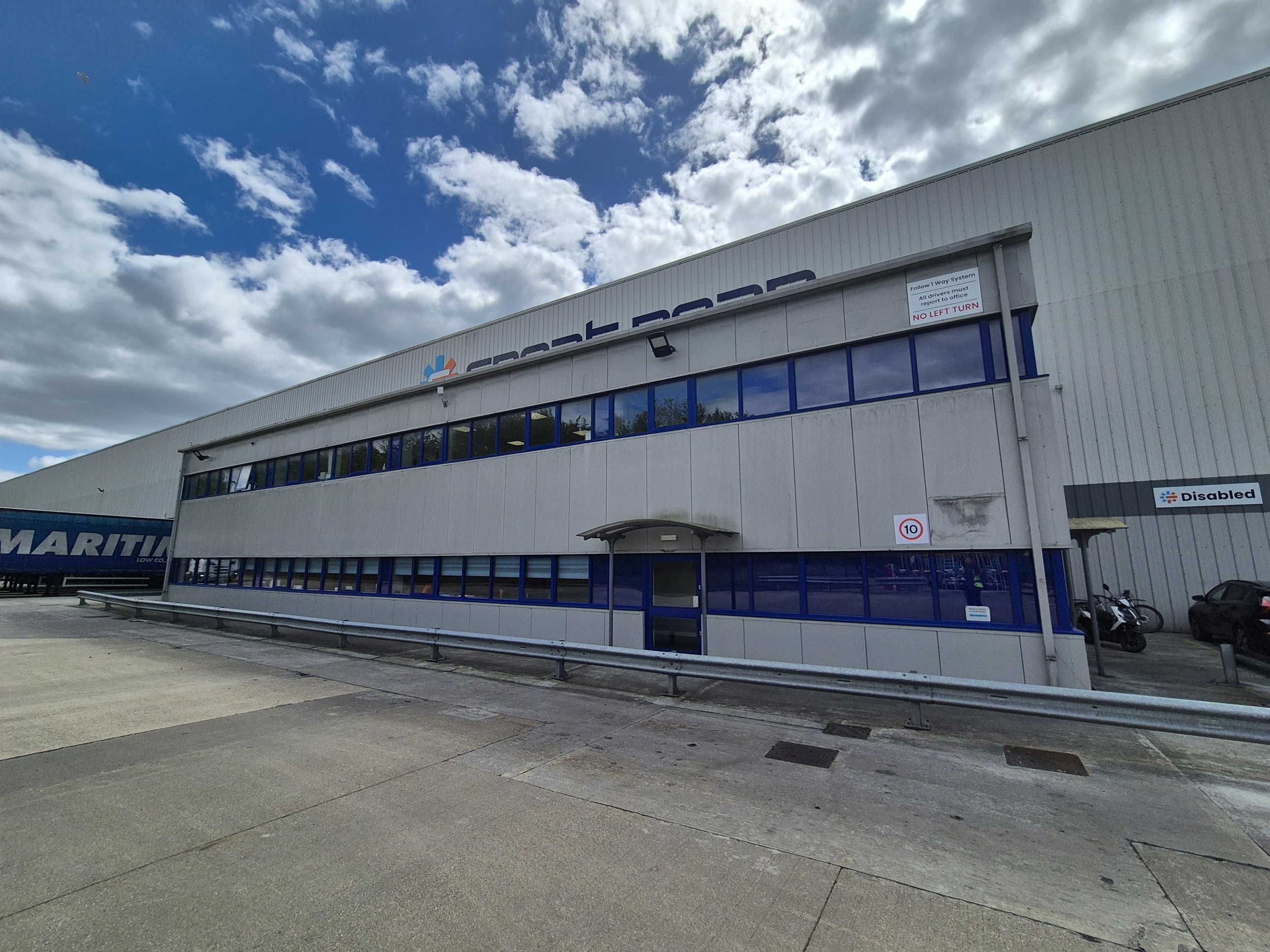
Securing an EPC A Rating for a 415,000 Sq Ft Logistics Facility
HollenPlus was appointed by a global investment manager to undertake a comprehensive EPC renewals across their property portfolio. The latest project has been the MEES compliance strategy and EPC renewal a for a 415,000 sq ft big-box logistics unit and its ancillary building in Yorkshire.
Utilising our data-driven building modelling approach, we successfully achieved asset-improving EPC A ratings across both units, future-proofing the development against tightening UK commercial property MEES regulations.
Proven Results Across Property Portfolios
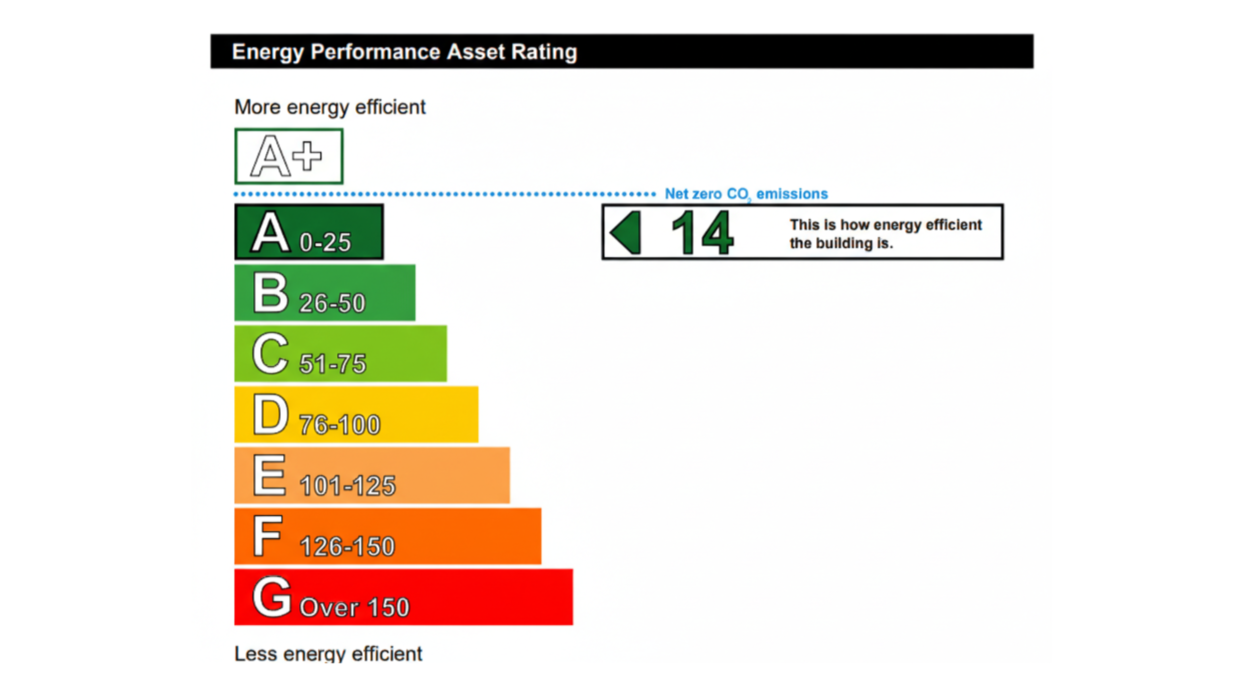
MEES Strategy and 140x EPC Portfolio Renewal
HollenPlus successfully created and delivered a portfolio wide MEES strategy, completing an EPC renewal program for a leading UK landlord across 140x assets in 12 weeks. The project improved their EPC ratings, reducing Capex requirements and improved forecast returns.
Pathway reports were delivered and unit-specific solutions were given for EPC improvements to reach EPC B & A. The client was further able to remove a previously allocated seven figure Capex sum to achieve EPC compliance across the portfolio, from their business plans.

Strategic MEES Compliance & Decarbonisation Road Map for a Retail Warehouse Asset
As part of a wider project across a portfolio of assets, HollenPlus was appointed to secure commercial property MEES compliance through targeted, risk managed energy interventions. Through navigating the risk, strategic evaluation and structured Capex optimisation, HollenPlus was able to establish an aligned road map for the asset to reach a long-term EPC B rating.
Our GRESB Consultancy Process
1. Portfolio & Assessment Review
We establish the reporting entity's requirements, portfolio composition, current GRESB position and investment objectives.
For existing participants, we review their latest assessment results and available supporting data.
2. Data & Evidence Gap Analysis
We review the completeness and quality of property-level sustainability information and identify missing evidence, reporting inconsistencies and improvement opportunities.
3. Assessment Preparation
We coordinate the collection and review of relevant portfolio information, support the preparation of assessment responses and assist with the agreed submission process.
4. Benchmarking & Performance Analysis
We examine results, compare performance against relevant benchmarks where data is available and identify the factors influencing portfolio outcomes.
5. Portfolio Improvement & Decarbonisation Strategy
We develop a prioritised improvement programme aligned with the client's ESG objectives, asset business plans, planned capital expenditure and reporting requirements.
The result is a practical strategy that connects sustainability reporting with long-term asset performance.
Why Choose HollenPlus for GRESB Consultancy?
Chartered Surveyor-Led Expertise
HollenPlus is a specialist commercial real estate sustainability consultancy led by professionals with extensive property investment, asset management and building performance experience.
We understand the relationship between sustainability performance, rental income, capital expenditure, leasing risk and investment returns.
Over £1 Billion of Real Estate Asset Management Experience
Our team brings experience of managing more than £1 billion of commercial real estate across the UK and Europe.
This investment background allows us to provide commercially informed recommendations that reflect the priorities of property owners, fund managers and investment committees.
Technical Building Performance Capabilities
Our expertise extends beyond ESG reporting into energy assessments, dynamic simulation modelling, retrofit, BREEAM, carbon analysis and decarbonisation planning.
This enables us to connect portfolio sustainability objectives with practical improvements to individual properties.
Independent, Commercially Focused Advice
We focus on the measures that deliver the greatest value for each asset.
Rather than treating sustainability as a standalone reporting obligation, we develop strategies aligned with operational efficiency, investment risk, capital value and portfolio business plans.
London-Based, UK-Wide Delivery
Based in Central London, HollenPlus supports commercial property owners and asset managers across London, the South East and the wider UK, with consultancy support for European property portfolios.
FAQs
-
Improving a GRESB score starts with identifying where performance is being lost and distinguishing reporting deficiencies from underlying asset performance issues.
HollenPlus reviews existing GRESB assessment results, energy and carbon data, building certifications, management policies and supporting evidence to identify opportunities for improvement.
We then develop a prioritised action plan addressing data completeness, operational building efficiency, sustainability management and decarbonisation.
Our focus is on achieving measurable improvements while ensuring recommended measures are commercially justified and aligned with the fund's investment strategy.
-
Not every property will contribute equally to portfolio sustainability risks or improvement opportunities.
We assess individual assets against operational energy consumption, carbon emissions, data availability, building efficiency, regulatory exposure and planned capital expenditure.
This allows investors and asset managers to identify properties where targeted interventions may deliver the greatest combination of environmental improvement, GRESB reporting benefits and financial returns.
Priorities may include energy-intensive offices, poorly performing industrial assets, properties with incomplete tenant data and buildings approaching significant refurbishment or plant replacement cycles.
-
Accessing reliable tenant energy data is a common challenge for commercial property investors, particularly within multi-let offices, retail assets and industrial portfolios subject to full repairing and insuring leases.
GRESB distinguishes between landlord-controlled and tenant-controlled consumption and includes specific requirements for reporting boundaries, data coverage and permitted estimates.
HollenPlus can review existing metering arrangements, utility information, lease obligations and tenant engagement procedures to identify data gaps and establish appropriate collection strategies.
We can also recommend improvements to metering, data-sharing agreements and green lease provisions to strengthen future reporting and support more effective energy management.
-
Potentially. Some improvements can be achieved through better data collection, more comprehensive supporting evidence, stronger sustainability management processes and more effective tenant engagement.
Other opportunities may involve relatively low-cost operational changes, including improvements to building controls, HVAC scheduling, lighting management and energy monitoring.
HollenPlus distinguishes between reporting improvements and physical interventions, prioritising actions according to their likely assessment impact, implementation cost and operational benefits.
Our approach is to avoid unnecessary expenditure undertaken solely to pursue additional GRESB points.
-
GRESB considerations can be integrated into technical due diligence, acquisition underwriting, asset business plans and disposal preparation.
Before acquisition, HollenPlus can review an asset's energy performance, carbon emissions, EPC and MEES position, existing certifications, operational data availability and decarbonisation requirements.
We assess how the property may influence the wider portfolio's sustainability profile and identify potential capital expenditure liabilities.
For disposals, we can help demonstrate the property's energy performance, environmental credentials and completed sustainability improvements to prospective purchasers.
GRESB reporting should complement, rather than replace, conventional investment and technical due diligence.
-
GRESB provides institutional investors with standardised information for assessing and comparing real estate sustainability management and performance.
A credible GRESB reporting programme can strengthen investor transparency, support capital-raising discussions and demonstrate a structured approach to identifying environmental risks.
However, a higher GRESB score does not automatically translate into higher property valuations or rental growth.
HollenPlus focuses on the underlying factors that may influence investment value, including energy costs, regulatory exposure, occupier requirements, future capital expenditure and asset obsolescence risk.
-
GRESB, CRREM, EPCs and Minimum Energy Efficiency Standards serve different but complementary purposes.
GRESB benchmarks sustainability management and performance, while CRREM assesses carbon transition risk against property-specific decarbonisation pathways. EPCs provide regulatory building energy ratings, and MEES establishes minimum energy performance requirements for relevant commercial lettings.
HollenPlus combines these assessments to identify regulatory and carbon risks, prioritise investment and develop coordinated portfolio decarbonisation strategies.
This approach ensures GRESB improvement measures also support wider asset management objectives rather than being treated as isolated reporting exercises.
-
GRESB results can help identify gaps in operational energy data, carbon reporting, environmental targets and asset performance.
HollenPlus combines this information with property-level energy assessments, CRREM pathway analysis, building services reviews and planned capital expenditure programmes.
We develop prioritised decarbonisation strategies incorporating potential improvements to heating, cooling, ventilation, controls, lighting, building fabric and renewable energy systems.
Recommendations are assessed against capital costs, operational savings, lease events, refurbishment cycles and investment holding periods to establish a commercially realistic delivery programme.
-
GRESB considers eligible building certifications and operational environmental performance within its Real Estate Assessment.
BREEAM certification can contribute to relevant building certification indicators, subject to the applicable assessment methodology, certification scheme and asset circumstances.
Operational improvements that reduce measured energy consumption and greenhouse gas emissions can also support performance reporting, although their effect on scoring depends on the relevant indicators and benchmarks.
HollenPlus provides BREEAM assessment, energy modelling, EPC and retrofit consultancy, enabling us to identify appropriate interventions and evaluate their wider commercial value.
-
Changes in portfolio composition can create additional complexity in GRESB reporting.
Assets acquired or disposed of during the reporting year require appropriate treatment of ownership periods and available performance information. Major refurbishments and development projects may also fall within different assessment components.
HollenPlus can review asset classifications, reporting boundaries, ownership dates, construction activity and data availability to support accurate portfolio reporting.
We also help asset managers understand the effect of portfolio changes on year-on-year performance comparisons and the interpretation of assessment results.
-
Yes. HollenPlus can provide centralised consultancy and coordination for real estate portfolios involving multiple properties, managing agents, occupiers and investment stakeholders.
Our services can include assessment readiness reviews, data collection protocols, managing agent engagement, evidence reviews, submission preparation support and post-assessment improvement planning.
For fund managers with limited internal ESG resources, we can act as an external technical adviser, helping investment teams maintain oversight while reducing the administrative burden associated with annual reporting.
The scope can be tailored to an individual fund, a property portfolio or specific technical reporting challenges.
-
Preparation should ideally begin several months before the annual submission window, rather than waiting until reporting opens.
Early engagement provides time to identify missing energy and carbon data, establish reporting responsibilities, engage with tenants and managing agents, review building certifications and resolve evidence deficiencies.
HollenPlus can undertake an initial GRESB readiness assessment and develop a structured reporting and improvement programme.
For existing participants, we recommend reviewing results soon after publication to distinguish opportunities for improved reporting from physical asset improvements that may require longer-term planning.


Speak with a member of the HollenPlus team to discuss your GRESB requirements for your portfolio and request a tailored strategy proposal.